Insights
GD-OES (Glow Discharge Optical Emission Spectroscopy) Method
GD-OES Method
GD-OES (Glow Discharge Optical Emission Spectroscopy) Method
IPU can offer chemical characterization of materials and surfaces with Glow Discharge optical Emission Spectroscopy (GD-OES). This method gives advantages, as the following:
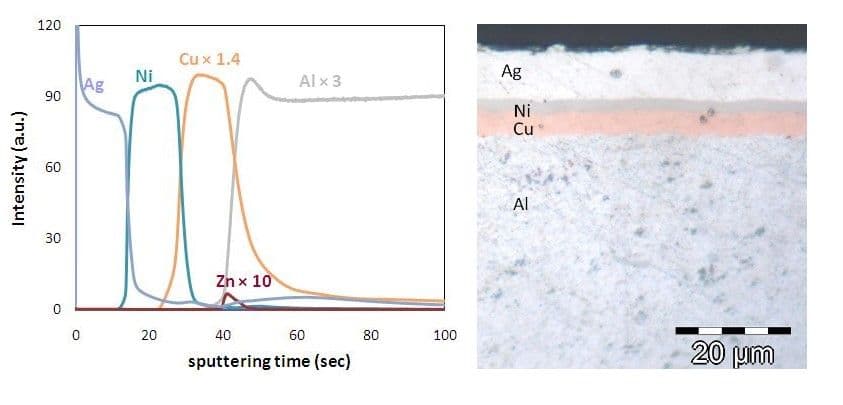
Both of surfaces and bulk can be analyzed with depth profiles
- The method can analyze 43 elements at same time, including hydrogen, carbon, oxygen, sulfur, chloride, and also all metals
- Analyzing is fast (1-10 micronmeters per minute)
- Possible to analyze relatively thick layer up to 0,15 mm
- All conductive materials can be analyzed
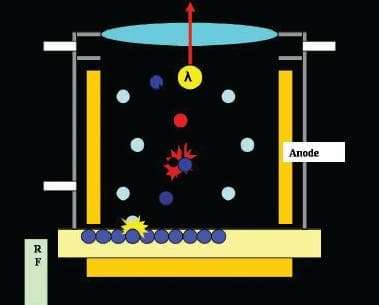
GD-OES analysis is conducted by RF-sputtering of surface with argon. These free atoms are excited with waves of characteristic wavelength. The emission spectroscopy identifies each element. This instrument covers broad spectrum from 110 to 620 nm, enabling analysis of light elements such as hydrogen, which is only one present in Denmark.
This article was written by Nikolas Aulin Paldan, Specialist Engineer, Product and Process Technology at IPU. If you have questions or want to know more about itegrating in sustainable innovation, feel free to reach out to him at .